
The Expensive Mistakes We Made Buying Valais Blacknose Sheep (Our First 6 Months)
We're six months into being Valais Blacknose sheep farmers, and I still can't quite believe it.
We started this whole endeavor back in December, and somehow it's already June. We're finally settled in — our entire foundation flock is here, the fencing is up, the infrastructure is built, and boy, oh boy, has it been a ride.
Check out our foundation flock!
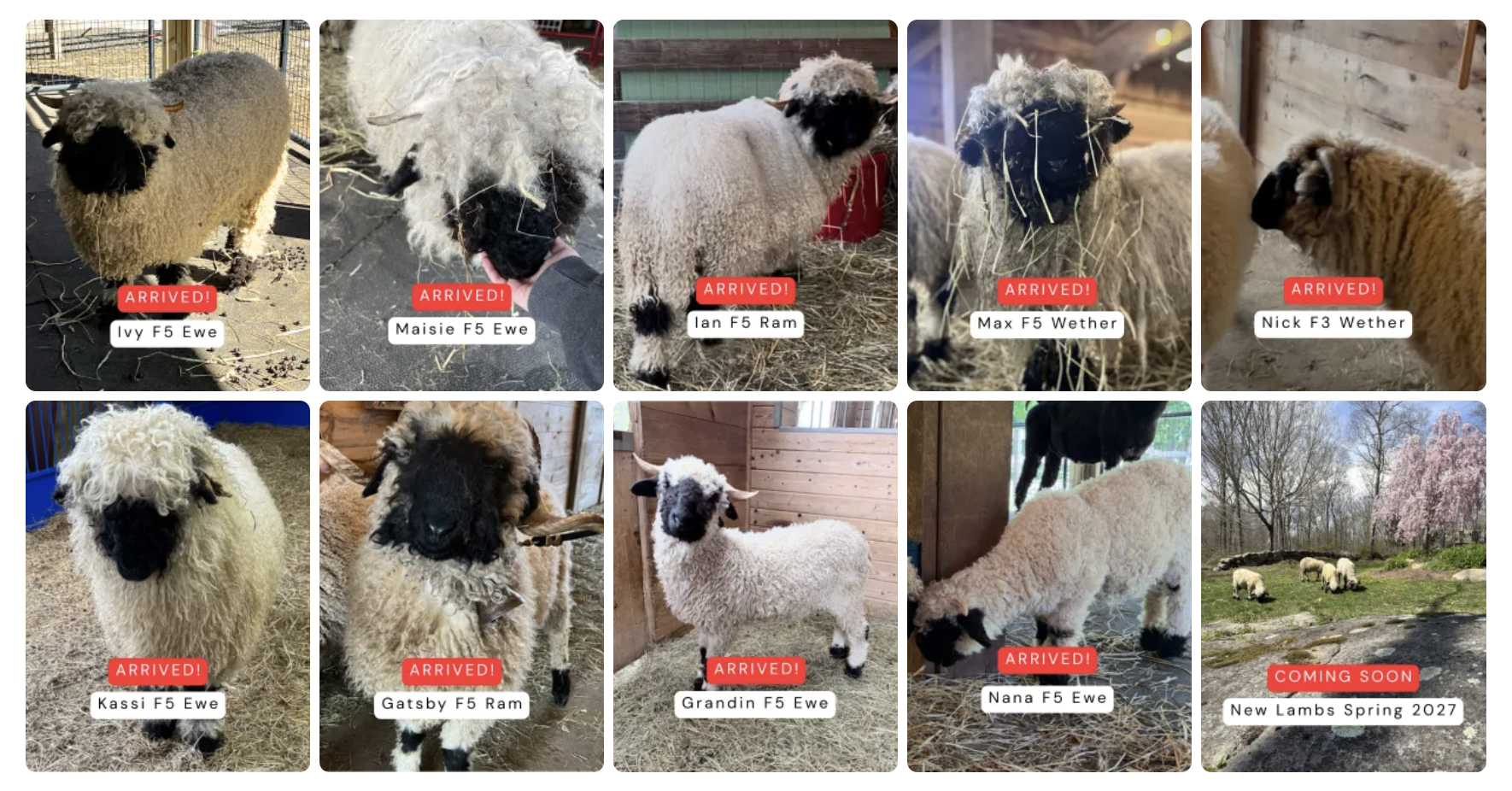
If you're researching the breed because you're dreaming about a little flock of teddy-bear-faced sheep grazing peacefully on your land, I want to give you something most of the care guides won't: the honest version. Not the Instagram version. The real, expensive, muddy, occasionally-vomit-covered version of what the first six months actually looks like.
So here's a step-by-step walk through the unexpected surprises — the hard ones and the delightful ones — of raising Valais Blacknose sheep when you're brand new to it.
1. Buying ethically is harder than you think
Our original plan was simple: go through one of the registries and buy good stock. There are two registries for Valais Blacknose sheep in the United States — the Valais Blacknose Sheep Society (VBSS) and the Valais Blacknose Sheep Association of North America (VBSANA). Registration gives you a pedigree, an F1-through-F5 grade or a pureblood designation, and on paper that feels like a guarantee.
Here's the truth: a pedigree tells you the genetics. It does not tell you the sheep is in good condition.
I knew, abstractly, that there were unethical breeders out there. But it's not until you run into one that it really lands. Our first three sheep came from a farm that was retiring, and at the time we didn't know any different. They seemed fine. The guardian llama that came with them, Candy, was visibly sickly and later developed a large cyst we still can't fully explain. And one of our wethers, Max, turned out to have a regurgitation issue — he brings up cud that gets on the other sheep, which means regular washing so flies don't become a problem. He's lightweight and struggles to gain. It's not the end of the world, but it's led to expensive vet bills and ongoing maintenance we didn't sign up for.
The pattern became a slow, progressive revelation. These were technically F5 animals, but I don't think anyone was paying close attention to conformation or breeding them safely. They're ours now, and we take excellent care of them — and there are bright spots. Maisie, an F6, shows real promise. Kassie, an F5, has already been a wonderful mom to healthy twins. But the lesson stuck: the pedigree is the floor, not the finish line.
2. The $10,000 lesson on cheap stock
This one still stings.
We put down a $10,000 non-refundable deposit on a flock of eight ewes — seven F4s and one F3. The math felt smart: breed an F4 ewe to an F5 ram and you get a purebred F5 lamb. F4s are cheaper, so we'd get a whole flock, have 10 to 20 lambs next year, and earn our investment back fast.
Then the red flags started. One of the ewes died. Several had trouble giving birth, and a couple lost their lambs. Worst of all, the breeders were breeding their ewes at under a year old — which is contraindicated for Valais Blacknose sheep.
We had to make a genuinely painful decision: stick with the purchase or walk away from $10,000. We walked. And then, because we'd learned the hard way that you want good stock, we replaced those eight ewes with two — for roughly the same price. Two. That's the price differential between cheap and quality in this breed.
Those two ewes arrived today. We now have five breeding ewes, two rams, and two wethers who are mostly around for the vibes. It's a smaller, healthier, more deliberate flock than we planned — and a much better one.
3. Pasture is not a free lawnmower
People imagine you get some sheep and they graze your grass and you never mow again. I did too.
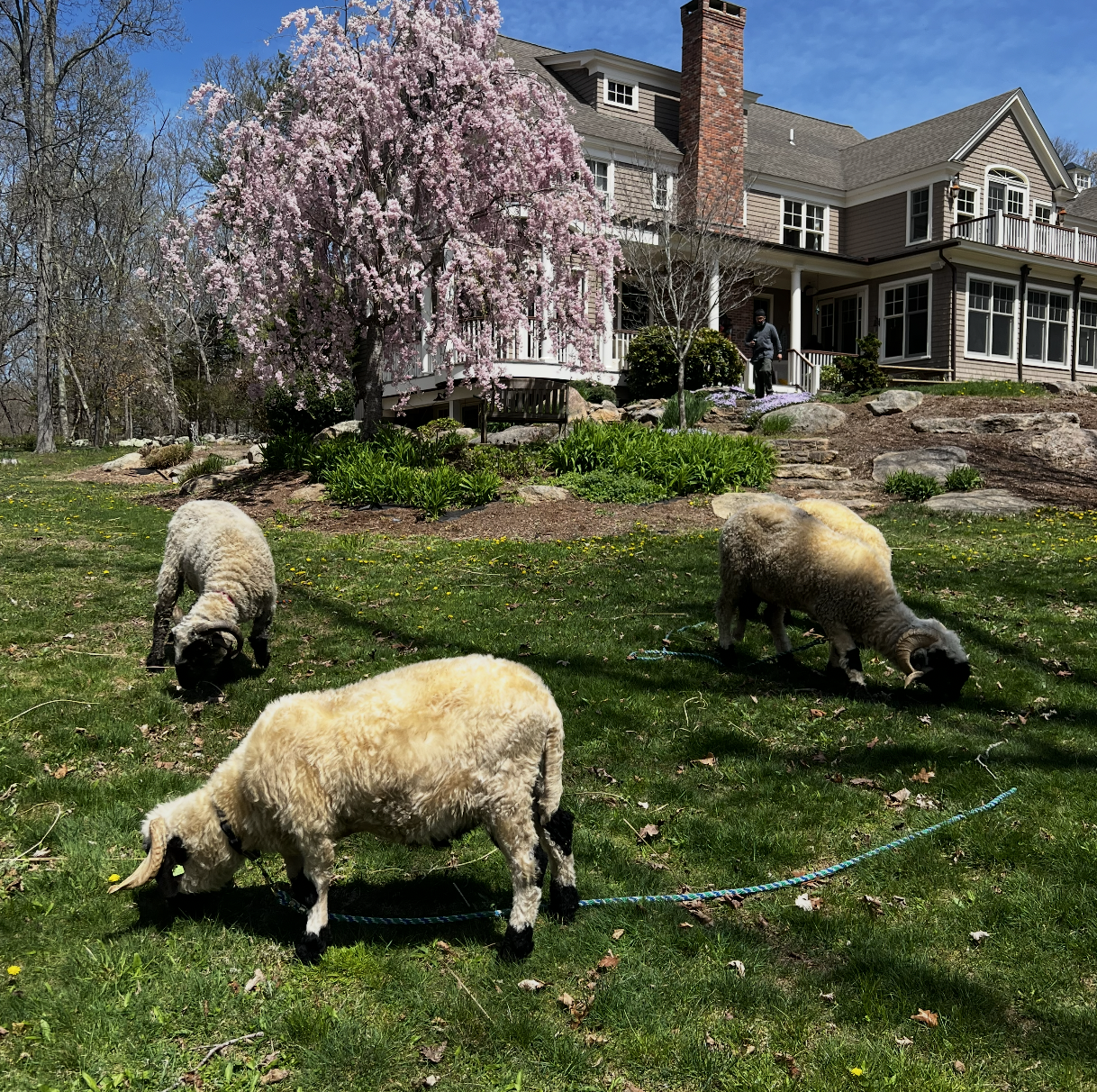
Our pastures are honestly pretty crappy. We've always mowed our land, but we never seeded it, fertilized it, or aerated it — and the sheep are not impressed. So we're supplementing heavily with hay and grain, which is expensive, and we'll still have to mow in places. The dream of "the sheep handle the grass" turned out to be a little ironic.
The bigger surprise was infrastructure. Because of parasites, you want to practice rotational grazing — sheep on one pasture for about 20 days, then moved to the next, then the next, so they're not constantly re-infecting themselves with a heavy parasite load. We built three fenced pastures for exactly this.
And then it hit us: we have two flocks. Boys and girls, separated nearly year-round except for breeding. Three pastures became six. AC had to build several thousand dollars of new fencing for the boys. And rams and ewes can't even share a fence line unless they're actively breeding — so we had to map out who's on which pasture at what time. It's not complicated math, but it's far more logistical than we ever imagined.
4. Parasites and deworming resistance
We knew deworming was coming. What we underestimated is how sensitive Valais Blacknose sheep are to parasites — younger animals especially, and that original band of three from Vermont most of all.
Our vet has come out three or four times to run fecals. We've treated with Cydectin, Safeguard, Prohibit — the whole cabinet. And Max, of course, had a heavy load that didn't respond to treatment. Twice. That points to either an unusually susceptible animal or resistant parasites, neither of which is ideal. Everyone in the sheep world deals with deworming eventually, but when your mornings are already full of chores and you add treating sheep on top, it adds up fast.
5. The great second-cut hay hunt
Before this, hay was just hay to me. Now I know our sheep are picky, and they strongly prefer second cut to first cut. First cut is stemmier; second cut is finer with similar protein.
We've searched high and low for second cut — sometimes driving an hour or more to find a farm that has it — while sitting on a $700 load of first cut they barely touch. It sounds like a small thing. But when you're trying to get ewes to exactly the right size for breeding, with mediocre pastures and a desire not to overload them on grain, getting the right forage starts to feel genuinely stressful.
--> Read more about Valais Blacknose Feeding
6. Shearing is a weather-watching event
Valais Blacknose sheep need shearing about three times a year, so you do this a lot — and it's stressful every time.
The sheep have to be bone dry, which turns shearing day into an anxious weather-watching ritual: no rain the day of, and no rain the two days before. Naturally, our very first shearing landed during a pouring, miserable March. You also have to pull their food beforehand so they're comfortable being flipped, which leaves them bored and out of sorts — sometimes ramming each other and nicking their horns.
Plenty of farmers skirt and sell their fleece, and someday maybe we will. Right now, as first-timers, we feel victorious just getting every sheep dried, sheared, and back in the pen without a nick. We have big ideas about a shearing stand we'd train them to use — but pregnant ewes shouldn't be flipped, so we've got some figuring out to do. We'll see.
The surprises that made it all worth it
I've spent a lot of words on what's hard, so let me be clear about what's been pure joy.
When we were shopping for sheep, I genuinely couldn't tell them apart. Now? Their personalities are so distinct it's almost funny. Some love animal crackers. Some prance. Some baa indignantly the second their feeder runs low. Nick, in particular, is such a ham that he makes every single visitor fall in love with sheep.
And there's been real interest from the community. We believe we're the first dedicated Valais Blacknose sheep farm in southern Connecticut — possibly the first in the whole state. We've already had lamb inquiries, visitors, and requests for farm tours, and my business clients have loved coming out to meet the flock.
The most unexpected gift, though, is how grounding sheep are. They're entirely present. They don't demand much of you. They've mastered Zen — whether they're chewing cud, standing in a field, or napping in the sun. If you're an ambitious, always-on kind of person, sheep quietly remind you to slow down and stare off into the sunset.
What's next at Wool & Wonder
This first six months has been an expensive, steep learning curve — and exactly the right one. We've got about four months now before breeding begins this fall, somewhere around October. Once the ewes are bred, it's a five-month journey to lambs.
So this will be the first time we get to watch a full cycle — Valais Blacknose sheep through all four seasons, and our very first lambs on the ground. We're excited. We're a little nervous. And we're so glad you're here for it.
Stay tuned.
Thinking about adding Valais Blacknose sheep to your life? We'll have lambs available after our first breeding season, and we welcome farm-tour requests at Wool & Wonder. [Reach out here] to get on our list — and to ask the questions we wish we'd known to ask six months ago.
Wool & Wonder Farm is a registered Valais Blacknose sheep breeding program in Connecticut. For more behind the scenes, be sure to follow us on
YouTube, TikTok, Instagram, and Facebook!