
Week One at Wool & Wonder Farm: Our First Valais Blacknose Sheep Arrive
Last Friday, February 13th, marked a milestone we'd been planning for months: our first Valais Blacknose sheep arrived at Wool & Wonder Farm. After countless hours of preparation, fence building, and barn readying, we finally welcomed our foundation flock from Vermont.
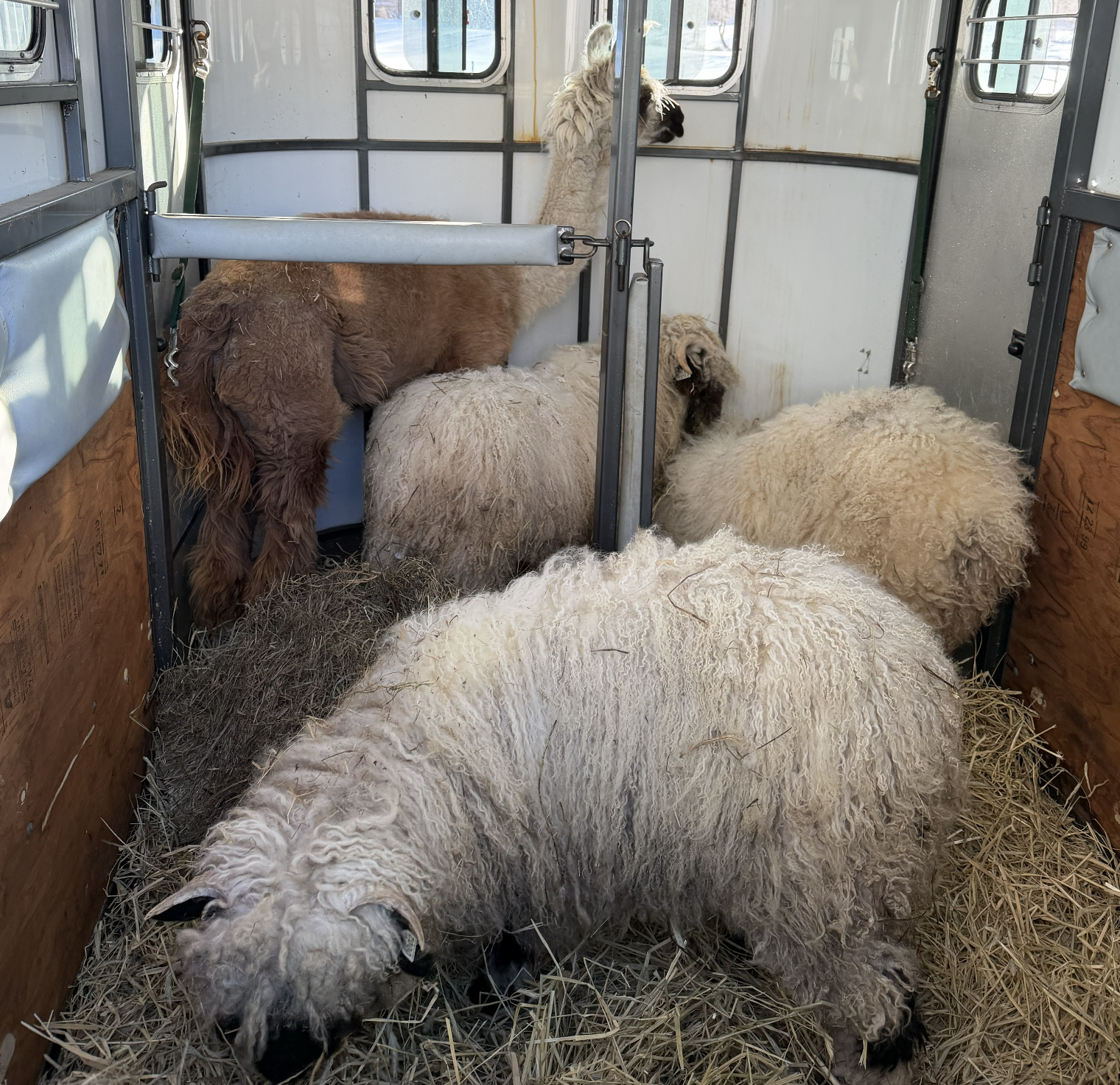
My husband picked them up in our trailer, and within an hour of arriving home, they were already out in the field exploring their new surroundings. The transition was smoother than we anticipated, and we've already gotten an incredible glimpse into each of their unique personalities.
Meet the Flock: Four Personalities, One Family
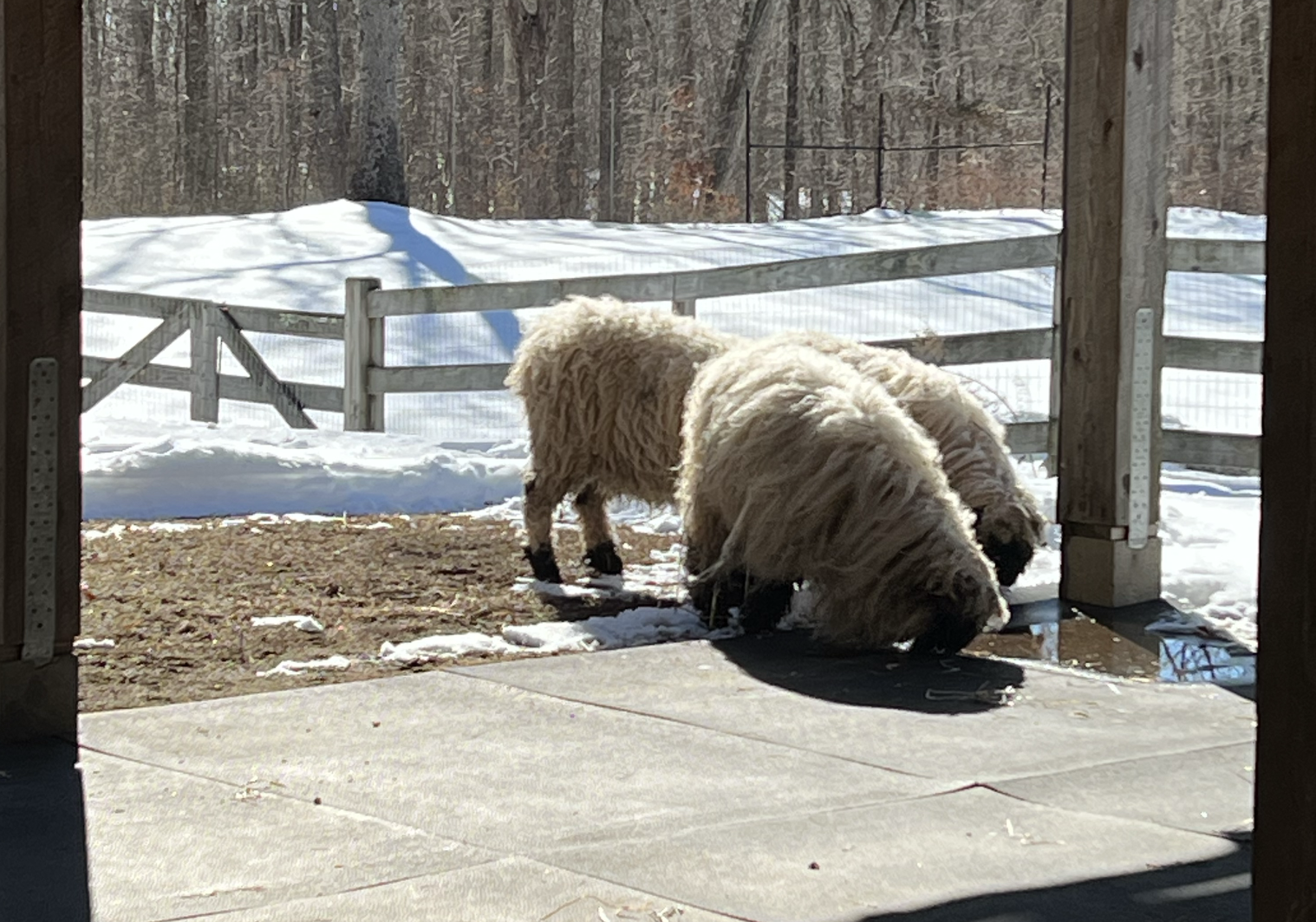
Kassie: The Matriarch
Kassie is our F5 breeding ewe and the mother of our twin lambs. She's everything we hoped for in a foundation sheep: confident, social, and not shy about letting us know what she wants. She absolutely loves chin scratches and forehead rubs, and she'll nudge your hand when she decides you've stopped petting too soon.
But make no mistake—Kassie is also the boss. She's the first to the grain bucket and doesn't hesitate to assert her authority when it comes to food or her favorite sleeping spots. As a first-time sheep farmer, I'm learning so much from watching her maternal instincts and the way she guides her lambs through their new environment.
Maisie: The Curious Explorer
Maisie, one of Kassie's twin lambs, is our little adventurer. She's always the first one to approach, sniffing and investigating everything with that characteristic Valais Blacknose curiosity. When we bring fresh hay or check water buckets, Maisie is right there, her black nose twitching as she examines every detail.
Her boldness and friendly nature make her a joy to work with, and I suspect she'll be the easiest to train when it comes time for halter work and show preparation.
Max: The Adorable Disaster
And then there's Max. Oh, Max. We've affectionately dubbed him "Max the Disaster," and it's a title he's earned within just one week. This wether (neutered male) seems to have a special talent for getting into messes. He's constantly covered in straw, dips his entire face into the water bucket (resulting in matted wool around his face), and generally looks like he's been through a windstorm.
Max is also the most skittish of the three sheep, which surprised us. He tends to follow his mom and sister closely and hasn't quite warmed up to us yet. I feel particularly bad because he's about to face a big transition—when our breeding rams arrive in the coming weeks, Max will be relocated to the "boy barn" to keep them company. I worry it'll be stressful for him, but that's exactly why we acquired him: to provide companionship for our rams.
Candy: The Silent Guardian
Rounding out our arrival crew is Candy, our 15-year-old guardian llama. True to her job description, Candy is always on alert. She surveys the property with keen eyes, positioning herself strategically to watch for potential threats. She hasn't let us touch her yet, maintaining that professional distance that makes her so effective at her job.
However, she will eat grain directly from our hands, which we consider progress. Living in Connecticut up against a forest with an active coyote population, having a dedicated guardian like Candy gives us tremendous peace of mind.
The Learning Curve: First Week Revelations
Sleeping Arrangements (or Lack Thereof)
One of my biggest surprises this week? Our sheep have completely rejected the beautiful 12×12 stall we prepared for them. We laid down deep, fresh straw, created a cozy bedding area, and assumed they'd naturally gravitate there at night. Instead, they prefer sleeping outside in the middle of the paddock—even when it's cold.
After some research (and a helpful conversation with ChatGPT), I learned that Valais Blacknose sheep actually prefer the open air on their wool and like maintaining clear sight lines for predator awareness. Our barn is a run-in style with no doors, which is ideal for ventilation and gives them the freedom to come and go. Last night was our first rainy weather, and I was relieved to see them finally choose the barn shelter. Small victories.
The Helicopter Mom Syndrome
I'll be honest: having a run-in barn with no doors is stressing me out. Everything I've read confirms that sheep are actually less stressed when they have freedom of movement rather than being locked up at night. Intellectually, I understand this. Emotionally? I'm checking the barn camera at least ten times every night.
I've already had my husband run out to the barn twice because I was convinced I heard something or that one of the animals wasn't okay. I'm learning to put aside my helicopter mom tendencies and trust that these animals have instincts far more refined than my anxious late-night camera checks. It's a work in progress.
The Great Hay Debate
Another revelation: sheep are surprisingly picky about their hay. If you leave hay out too long, they get bored with it and demand fresh hay. This is both hilarious and frustrating, especially considering how expensive quality hay has become. I keep thinking about all the "wasted" hay they've trampled or ignored, but after joining several sheep farming groups online, I've learned this is an incredibly common complaint.
We're using first-cut hay, which is more fibrous and better for their digestive systems, but it also means it's less palatable than the softer second or third cut. The hay drama is real, folks.
Grain: The Five-Second Food Frenzy
Speaking of food, I've discovered that grain time is the absolute highlight of everyone's day. The enthusiasm is palpable the moment we walk toward the barn with the feed bucket. Unfortunately, the entire grain experience lasts approximately five seconds before every morsel has been devoured. We may need to reduce their grain intake slightly as we monitor their digestive adjustment to their new environment and diet, which I'm sure will be met with great disappointment.
Poop Watch 2025
I never imagined I'd become someone who examines animal feces multiple times a day, yet here we are. Sheep poop tells you a lot about their health and diet, and I'll admit I've become slightly obsessive about it. Most of what I'm seeing looks healthy, but there's some indication that one or two of them are having minor digestive adjustments—the pellets are a bit clumpier than ideal.
This could be related to the diet change from their previous farm, or it could mean we need to adjust their grain-to-hay ratio. We're monitoring closely and making small adjustments as needed. Welcome to farming, where poop analysis becomes a regular part of your day.
Looking Ahead: Growing the Flock
Week one is just the beginning. Over the next two weeks, we're expecting several more arrivals:
Two breeding rams to establish our breeding program
Another wether to provide companionship
One more ewe to expand our foundation flock
A second guardian llama to patrol our smaller barn area
These arrivals will require significant logistical coordination. We need to move Max down to the boy barn (which honestly seems stressful and I'm letting my husband handle that one), set up the smaller barn for the new arrivals, and ensure both locations have adequate guardian llama coverage given our proximity to the forest and active coyote population.
In fact, last year we had a coyote family birth pups right in our yard, which reinforced our decision to invest in guardian animals and install electric fencing this spring. Safety is paramount.
Our timeline: We won't have our complete flock until July, when our final breeding group arrives. It's a marathon, not a sprint, and we're learning patience along the way.
The Feral Cat Saga: An Unexpected Subplot
As if starting a sheep farm wasn't enough, we're also in the middle of an intensive feral cat rescue operation. We took in three feral cats back in January with the goal of establishing barn cats to help with rodent control.
Glacier, one of our rescues, is about ready to be released after six to seven weeks of acclimation. This is a big, nerve-wracking moment. Will she stay on the property, or will she bolt into the forest? We've done everything by the book, but there's no guarantee. I'm really hoping she stays.
The other two ferals—Tundra and Everest—have essentially failed as barn cat candidates. They weren't handling the cold well, so now they're living in my office, wreaking havoc on my work-from-home setup. Despite my best efforts to socialize them, they have zero interest in me. It's humbling, honestly. You can't force trust, and these cats are teaching me that lesson daily.
The Hardest Lesson: You Don't Have as Much Control as You Think
This week also brought sobering news. We have a flock on deposit from another breeder, and we learned this past weekend that one of their pregnant ewes died unexpectedly. She was carrying twins. We're waiting for blood test results to understand what happened, but it's a stark reminder of the realities of farming.
You can do everything right—provide excellent care, monitor health closely, follow best practices—and still lose animals. It's heartbreaking, and it's a lesson I know I'll have to learn over and over again as we grow Wool & Wonder Farm. Control is largely an illusion in agriculture. What we can control is our commitment to animal welfare, our willingness to learn, and our dedication to doing right by every animal in our care.
Week One Reflections
As I write this, Max is probably getting straw stuck in his wool somewhere, Maisie is investigating something she shouldn't, Kassie is bossing everyone around, and Candy is standing guard. And despite the late-night camera checks, the poop monitoring, the hay waste, and the steep learning curve, my husband and I are absolutely in love with these animals.
Farming isn't what I expected—it's harder, messier, more humbling, and infinitely more rewarding than I imagined. We're learning to let go of perfection and embrace the beautiful chaos of working with livestock. We're discovering that sheep have distinct personalities, preferences, and quirks that make each day different.
Most importantly, we're building something meaningful here at Wool & Wonder Farm. With each passing day, we're becoming better shepherds, more attentive caretakers, and more realistic about the incredible privilege and responsibility of raising these remarkable Valais Blacknose sheep.
Week one is in the books. Here's to many more weeks of learning, growing, and falling even more in love with farm life.
For more behind the scenes, be sure to follow us on YouTube, TikTok, Instagram, and Facebook!