
Ram Fighting a Wether? Here's Exactly What We Did
We raise Valais Blacknose sheep, and if you do too, you already know they have big personalities packed into those fluffy, teddy-bear frames. What you might not expect is how seriously they take their social hierarchy — and what happens when a young ram decides it's time to climb the ladder.
That's exactly what went down between Ian, our young ram, and Nick, our older wether. Here's what happened, what we did about it, and what you should know if you're dealing with something similar on your farm.
Understanding the Pecking Order
Sheep are hierarchical animals, and rams take that hierarchy seriously. In our flock, Gatsby is the herd sire — the big dog, the top ram, unchallenged. Below him, spots two and beyond are always up for negotiation.
The issue with Ian and Nick is that they were both competing for that number two position. Ian is young, hormonal, and convinced he's destined for greatness. Nick is an older wether — meaning he's castrated and can't breed — but he's bigger than Ian right now and has no intention of being pushed around.
That combination is a recipe for drama.
It's worth understanding that wethers can and do participate in dominance behavior even though they're not intact. Nick wasn't going to just step aside because Ian decided it was his time. And Ian, flooded with teenage ram hormones, wasn't backing down either. The result was a genuine clash that left us needing to intervene.
What the Fight Actually Looked Like
If you've never seen sheep fight, it's not subtle. Rams (and apparently determined wethers) will charge each other head-on, making contact with their horns. It's loud, it looks alarming, and it can absolutely cause injury — especially to the horns and the area around them.
In Blacknose sheep, the horns are prominent and a point of pride, which also makes them a vulnerability in a fight. When Ian and Nick went at it, horn contact was the main concern.
What We Did About It
We didn't just separate them and hope for the best. We worked through it in steps, and honestly, the combination of interventions is what made the difference.
Step 1: Treat Any Injuries First
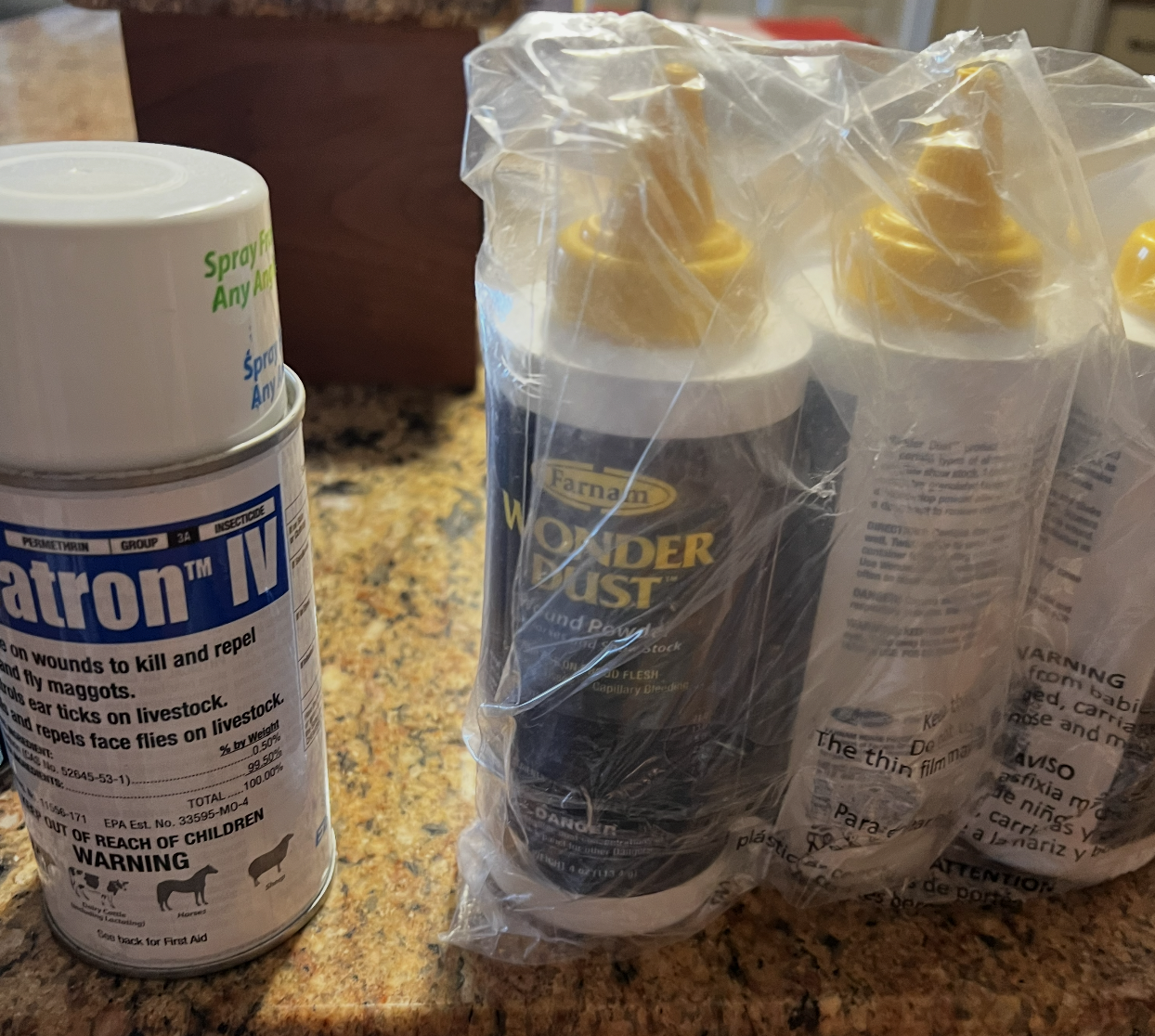
Before anything else, we assessed Ian's horns and treated them. We used WonderDust — a wound powder that dries out injuries and helps prevent infection — along with Catron, which is a wound spray that also deters flies. If your ram has taken any horn or head injuries in a fight, treatment comes first, full stop. An untreated wound on a ram who's still agitated is a problem that compounds fast.
Make sure to have this on hand before you get sheep as it takes a few days to come in, and it's not something that Walmart carries.
Step 2: Separate and Supervise
We separated Ian and Nick immediately after the incident. Separation alone isn't a permanent solution, but it's necessary in the short term to stop the active conflict and let both animals calm down. We kept a close eye on both of them during this time — watching for signs of continued distress, injury we may have missed, or behavioral changes.
Step 3: Ram Jail
This is one of the most useful tools in sheep management and it doesn't get talked about enough. Ram jail means putting your ram in a space where he can see the flock but cannot get to them. In our case, Ian spent about a day behind the gate — visible to everyone, part of the scene, but physically separated.
The reason this works is that it removes the ram's ability to act on his impulses without removing him from the social environment entirely. Full isolation can actually make aggression worse when the animal is reintroduced. Ram jail lets him stay connected to the flock dynamic while the tension settles.
The funny part? Nick (the one he was fighting), slept right next to him up against the gate. #boydrama
Step 4: Add a Second Feeder
This one sounds almost too simple, but it made a real difference. A significant amount of sheep conflict — especially between animals competing for social position — is driven by resource guarding. One feeder means one choke point where dominance gets tested every single feeding.
We added a second feeder to the boy barn, and it reduced the flashpoints considerably. When there's enough space and enough resources, lower-ranking animals don't have to challenge constantly just to eat.
How It Resolved
Within a few days of working through these steps, Ian had settled down noticeably. The tension between him and Nick dropped, the drama in the boy barn subsided, and life went back to normal. The pecking order didn't disappear — Ian is still going to be Ian, and that number two spot is still contested — but the active conflict resolved.
What to Watch For Going Forward
Even after things calm down, it's worth keeping an eye on a few things:
Feeding time behavior. This is when dominance posturing tends to flare back up. Watch for one animal consistently driving another away from the feeder.
New additions to the flock. Any time the social group changes, the hierarchy gets renegotiated. Be prepared for a reset period.
Seasonal hormones. Young rams especially can ramp up significantly during breeding season even if they're not being used for breeding. Ian will likely need more management attention as he matures.
Horn and head injuries. Check your animals regularly if you know conflict has been happening, even low-level. Injuries in the horn area can be easy to miss under all that wool.
The Bottom Line
Rams fighting — or in our case, a ram and a determined wether — is a normal part of managing a sheep flock. It doesn't mean something has gone wrong with your animals or your setup. It means you have sheep, and sheep have opinions about where they rank.
The key is not to panic, treat any injuries promptly, use structured interventions like ram jail rather than just isolating and hoping, and look at your environment for things like feeder competition that might be making the conflict worse.
Ian and Nick are fine. Gatsby remains unbothered. And the boy barn is peaceful again — for now.
For more behind the scenes, be sure to follow us on
YouTube,TikTok,Instagram, and Facebook!